It is in my opinion that yes they are in a world where at least 2 nations possess nukes. There are only 2 solutions: complete control and elimination of nukes or the eventual development of such weapons by all nations in order to ward off attack from other nation states.
The spread of Democracy could also stage off nuclear conflicts. Such an ideology is often touted as foreign policy. I however believe this to be bolder dash obviously since the United States is the only country in history to deploy nukes.
Nuclear technology has the potential to be beneficial in energy, healthcare, and space exploration.
We must dissect the words “vital” and “beneficial”. Vital and necessary when faced with the realities of war. Beneficial they are not to a world on the edge of destroying itself.
Monday, November 19, 2007


A Positive Outlook Is Overrated
“I believe that there is no one right way to cope with all the pain of living. ... If we are prevented from coping in our own way, be it 'positive' or 'negative,' we function less well.”
"Many Americans insist that everyone have a positive attitude, even when the going gets rough. From the self-help bookshelves to the Complaint-Free World Movement, the power of positive thinking is touted now more than ever as the way to be happy, healthy, wealthy and wise.
The problem is that this demand for good cheer brings with it a one-two punch for those of us who cannot cope in that way: First you feel bad about whatever's getting you down, then you feel guilty or defective if you can't smile and look on the bright side. And I'm not even sure there always is a bright side to look on.
I believe that there is no one right way to cope with all of the pain of living. As an academic psychologist, I know that people have different temperaments, and if we are prevented from coping in our own way, be it "positive" or "negative," we function less well.
As a psychotherapist, I know that sometimes a lot of what people need when faced with adversity is permission to feel crummy for a while, to realize that feeling bad is not automatically the same as being mentally ill. Some of my one-session "cures" have come from reminding people that life can be difficult, and it's OK if we're not happy all of the time.
This last point first became apparent to me in 1986. I came down with the flu accompanied by searing headaches that lasted for weeks afterward. Eventually a neurologist told me that a strain of flu that winter had left many people with viral meningitis. He reassured me that I would make a full recovery, but I was left traumatized by the weeks of undiagnosed pain. I really thought I had a brain tumor or schizophrenia. Being a psychologist didn't help; I was an emotional wreck.
Fortunately it happened that my next-door neighbor was a brilliant psychiatrist, Aldo Llorente from Cuba. I asked him, "Aldo, am I a schizophrenic?"
"Professor," he pronounced, "you are a mess, but you are not a mentally ill mess. You are just terrified."
I told Aldo that two of my friends insisted that I cheer up. I tried to be cheerful for a week, but that only increased my distress. Aldo told me, "You say to them: 'Friends, I would like to be more cheerful, but right now I am too terrified to be cheerful. So I will let you know when I am not terrified anymore.'"
The moment I delivered Aldo's message, I felt better. Aldo had made it OK for me to cope in my own way, to recover at my own pace, to be my own mess of a self. That is when I began to realize that I had been tyrannized by the idea that everyone must always have a positive attitude.
Having flourished in my own authentically kvetchy way, I believe that we would be better off if we let everyone be themselves — positive, negative or even somewhere in-between.
Independently produced for All Things Considered by Jay Allison and Dan Gediman with John Gregory and Viki Merrick."
"Many Americans insist that everyone have a positive attitude, even when the going gets rough. From the self-help bookshelves to the Complaint-Free World Movement, the power of positive thinking is touted now more than ever as the way to be happy, healthy, wealthy and wise.
The problem is that this demand for good cheer brings with it a one-two punch for those of us who cannot cope in that way: First you feel bad about whatever's getting you down, then you feel guilty or defective if you can't smile and look on the bright side. And I'm not even sure there always is a bright side to look on.
I believe that there is no one right way to cope with all of the pain of living. As an academic psychologist, I know that people have different temperaments, and if we are prevented from coping in our own way, be it "positive" or "negative," we function less well.
As a psychotherapist, I know that sometimes a lot of what people need when faced with adversity is permission to feel crummy for a while, to realize that feeling bad is not automatically the same as being mentally ill. Some of my one-session "cures" have come from reminding people that life can be difficult, and it's OK if we're not happy all of the time.
This last point first became apparent to me in 1986. I came down with the flu accompanied by searing headaches that lasted for weeks afterward. Eventually a neurologist told me that a strain of flu that winter had left many people with viral meningitis. He reassured me that I would make a full recovery, but I was left traumatized by the weeks of undiagnosed pain. I really thought I had a brain tumor or schizophrenia. Being a psychologist didn't help; I was an emotional wreck.
Fortunately it happened that my next-door neighbor was a brilliant psychiatrist, Aldo Llorente from Cuba. I asked him, "Aldo, am I a schizophrenic?"
"Professor," he pronounced, "you are a mess, but you are not a mentally ill mess. You are just terrified."
I told Aldo that two of my friends insisted that I cheer up. I tried to be cheerful for a week, but that only increased my distress. Aldo told me, "You say to them: 'Friends, I would like to be more cheerful, but right now I am too terrified to be cheerful. So I will let you know when I am not terrified anymore.'"
The moment I delivered Aldo's message, I felt better. Aldo had made it OK for me to cope in my own way, to recover at my own pace, to be my own mess of a self. That is when I began to realize that I had been tyrannized by the idea that everyone must always have a positive attitude.
Having flourished in my own authentically kvetchy way, I believe that we would be better off if we let everyone be themselves — positive, negative or even somewhere in-between.
Independently produced for All Things Considered by Jay Allison and Dan Gediman with John Gregory and Viki Merrick."
Hate Crimes Rise
"WASHINGTON November 19, 2007, 4:55 p.m. ET · Hate crime incidents rose nearly 8 percent last year — more than half motivated by racial prejudice, the FBI reported Monday, as civil rights advocates increasingly take to the streets to protest what they call official indifference to intimidation and attacks against blacks and other minorities.
Police across the nation reported 7,722 criminal incidents in 2006 targeting victims or property as a result of bias against a race, religion, sexual orientation, ethnic or national origin or physical or mental disability. That was up 7.8 percent from 7,163 incidents reported in 2005.
Although the noose incidents and beatings among students at Jena, La., high school occurred in the last half of 2006, they were not included in the report. Only 12,600 of the nation's more than 17,000 local, county, state and federal police agencies participated in the hate crime reporting program in 2006 and neither Jena nor LaSalle Parish, in which the town is located, were among the agencies reporting.
Nevertheless, the Jena incidents, and a subsequent rash of noose and other racial incidents around the country, have spawned civil rights demonstrations that culminated last week at Justice Department headquarters here. The department said it investigated the Jena incident but decided not to prosecute because the federal government does not typically bring hate crime charges against juveniles.
Organizers said 100 busloads of protesters joined Friday's march here. In September, an estimated 20,000 protesters marched through Jena. On Nov. 3, hundreds of protesters marched through downtown Charleston, W. Va., to urge prosecutors to add hate crime charges against six white people charged in the beating, torture and sexual assault of a 20-year-old black woman who was discovered Sept. 8 after several days of alleged captivity in a rural trailer.
The Jena case began in August 2006 after a black student sat under a tree known as a gathering spot for white students. Three white students later hung nooses from the tree. They were suspended by the school but not prosecuted. Six black teenagers, however, were charged by LaSalle Parish prosecutor Reed Walters with attempted second-degree murder of a white student who was beaten unconscious in December 2006. The charges have since been reduced to aggravated second-degree assault, but civil rights protesters have complained that no charges were filed against the white students who hung the nooses.
"The FBI report confirms what we have been saying for many months about the severe increase in hate crimes," said the Rev. Al Sharpton, who organized Friday's march. "What is not reported, however, is the lack of prosecution and serious investigation by the Justice Department to counter this increase in hate crimes." Sharpton called for Attorney General Michael Mukasey to meet with members of the Congressional Black Caucus and civil rights leaders to discuss this enforcement.
Justice Department spokesman Brian Roehrkasse noted that Mukasey praised the civil rights movement at his confirmation hearings and plans over the next several months to meet "with a number of groups and individuals who have an interest in or concerns about the work" of the department. Roehrkasse also noted that federal prosecutors convicted a record 189 defendants of civil rights violations in the fiscal year that ended Sept. 30.
The Justice Department says it is actively investigating a number of noose incidents at schools, workplaces and neighborhoods around the country. It says "a noose is a powerful symbol of hate and racially motivated violence" recalling the days of lynchings of blacks and that it can constitute a federal civil rights offense under some circumstances.
The FBI report does not break out the number of noose incidents but the two most frequent hate crimes in 2006 were property damage or vandalism, at 2,911 offenses, and intimidation, at 2,046 offenses. There were 3 murders, 6 rapes, 860 aggravated assaults, 1,447 simple assaults and 41 arsons. Other offenses included robbery, burglary, larceny, and motor vehicle theft.
The 7,722 hate crime incidents involved 9,080 specific criminal offenses, include 5,449 against individuals, 3,593 against property and 38 classified as against society at large. A single incident can be aimed at both people and property.
Since the FBI began collecting hate crime data in 1991, the most frequent motivation has been racial bias, accounting for 51.8 percent of incidents in 2006, down from the 54.7 in 2005.
Also in 2006, religious bias was blamed for 18.9 percent of the incidents; sexual orientation bias for 15.5 percent, and ethnic or national origin — for 12.7 percent.
"This FBI report confirms ... that hate crimes protections for the gay, lesbian, bisexual and transgender community are long overdue," said Joe Solmonese, president of the Human Rights Campaign, a civil rights group. Solmonese called on Congress to pass pending legislation that would expand the federal hate crime statute to cover crimes motivated by sexual orientation. The law currently covers only crimes based on race, color, religious or national origin.
Lack of full participation by the more than 17,000 police agencies around the nation somewhat undermines year-to-year comparisons.
For instance, in 2004, 12,711 agencies reported 7,649 incidents. In 2005, only 12,417 agencies reported and incidents dropped 6 percent to 7,163. But in 2006, agencies reporting rose to 12,620 and incidents climbed 7.8 percent to 7,722.
In 2006, police identified 7,330 offenders; 58.6 percent white, 20.6 percent black, 12.9 percent race unknown and the rest other races. Thirty-one percent of incidents occurred near residences; 18 percent on roads; 12.2 percent at colleges or schools, 6.1 percent in parking lots or garages, 3.9 percent at churches, synagogues or temples, and the remainder elsewhere."
———
On the Net:
FBI report: http://www.fbi.gov/page2/nov07/hatecrime11190
Police across the nation reported 7,722 criminal incidents in 2006 targeting victims or property as a result of bias against a race, religion, sexual orientation, ethnic or national origin or physical or mental disability. That was up 7.8 percent from 7,163 incidents reported in 2005.
Although the noose incidents and beatings among students at Jena, La., high school occurred in the last half of 2006, they were not included in the report. Only 12,600 of the nation's more than 17,000 local, county, state and federal police agencies participated in the hate crime reporting program in 2006 and neither Jena nor LaSalle Parish, in which the town is located, were among the agencies reporting.
Nevertheless, the Jena incidents, and a subsequent rash of noose and other racial incidents around the country, have spawned civil rights demonstrations that culminated last week at Justice Department headquarters here. The department said it investigated the Jena incident but decided not to prosecute because the federal government does not typically bring hate crime charges against juveniles.
Organizers said 100 busloads of protesters joined Friday's march here. In September, an estimated 20,000 protesters marched through Jena. On Nov. 3, hundreds of protesters marched through downtown Charleston, W. Va., to urge prosecutors to add hate crime charges against six white people charged in the beating, torture and sexual assault of a 20-year-old black woman who was discovered Sept. 8 after several days of alleged captivity in a rural trailer.
The Jena case began in August 2006 after a black student sat under a tree known as a gathering spot for white students. Three white students later hung nooses from the tree. They were suspended by the school but not prosecuted. Six black teenagers, however, were charged by LaSalle Parish prosecutor Reed Walters with attempted second-degree murder of a white student who was beaten unconscious in December 2006. The charges have since been reduced to aggravated second-degree assault, but civil rights protesters have complained that no charges were filed against the white students who hung the nooses.
"The FBI report confirms what we have been saying for many months about the severe increase in hate crimes," said the Rev. Al Sharpton, who organized Friday's march. "What is not reported, however, is the lack of prosecution and serious investigation by the Justice Department to counter this increase in hate crimes." Sharpton called for Attorney General Michael Mukasey to meet with members of the Congressional Black Caucus and civil rights leaders to discuss this enforcement.
Justice Department spokesman Brian Roehrkasse noted that Mukasey praised the civil rights movement at his confirmation hearings and plans over the next several months to meet "with a number of groups and individuals who have an interest in or concerns about the work" of the department. Roehrkasse also noted that federal prosecutors convicted a record 189 defendants of civil rights violations in the fiscal year that ended Sept. 30.
The Justice Department says it is actively investigating a number of noose incidents at schools, workplaces and neighborhoods around the country. It says "a noose is a powerful symbol of hate and racially motivated violence" recalling the days of lynchings of blacks and that it can constitute a federal civil rights offense under some circumstances.
The FBI report does not break out the number of noose incidents but the two most frequent hate crimes in 2006 were property damage or vandalism, at 2,911 offenses, and intimidation, at 2,046 offenses. There were 3 murders, 6 rapes, 860 aggravated assaults, 1,447 simple assaults and 41 arsons. Other offenses included robbery, burglary, larceny, and motor vehicle theft.
The 7,722 hate crime incidents involved 9,080 specific criminal offenses, include 5,449 against individuals, 3,593 against property and 38 classified as against society at large. A single incident can be aimed at both people and property.
Since the FBI began collecting hate crime data in 1991, the most frequent motivation has been racial bias, accounting for 51.8 percent of incidents in 2006, down from the 54.7 in 2005.
Also in 2006, religious bias was blamed for 18.9 percent of the incidents; sexual orientation bias for 15.5 percent, and ethnic or national origin — for 12.7 percent.
"This FBI report confirms ... that hate crimes protections for the gay, lesbian, bisexual and transgender community are long overdue," said Joe Solmonese, president of the Human Rights Campaign, a civil rights group. Solmonese called on Congress to pass pending legislation that would expand the federal hate crime statute to cover crimes motivated by sexual orientation. The law currently covers only crimes based on race, color, religious or national origin.
Lack of full participation by the more than 17,000 police agencies around the nation somewhat undermines year-to-year comparisons.
For instance, in 2004, 12,711 agencies reported 7,649 incidents. In 2005, only 12,417 agencies reported and incidents dropped 6 percent to 7,163. But in 2006, agencies reporting rose to 12,620 and incidents climbed 7.8 percent to 7,722.
In 2006, police identified 7,330 offenders; 58.6 percent white, 20.6 percent black, 12.9 percent race unknown and the rest other races. Thirty-one percent of incidents occurred near residences; 18 percent on roads; 12.2 percent at colleges or schools, 6.1 percent in parking lots or garages, 3.9 percent at churches, synagogues or temples, and the remainder elsewhere."
———
On the Net:
FBI report: http://www.fbi.gov/page2/nov07/hatecrime11190
Thursday, November 15, 2007
Demands on Army Exceed Supply

"The war in Iraq has achieved its own share of milestones: It is the third-longest in American history and will soon be the second-most expensive. And now, it's the first prolonged war since the American Revolution that has been fought by an all-volunteer military.
It's no secret that the U.S. Army is too small to face the current demands placed on it by its civilian leaders. By 2012, the Army — the largest of the four service branches — will grow its active-duty component to about 550,000 soldiers. And the Army's top military commander, Gen. George Casey, wants to make it bigger.
"I believe that the 547,000 active [duty component] that we're building is a good milestone," Casey told members of the Senate Armed Services committee on Thursday. "But I believe it's probably not big enough."
The Army chief now says that if the United States were to take part in another conflict, he probably wouldn't have the troops to carry out the mission.
"The current demand for our forces exceeds the sustainable supply," Casey said. "We're consumed with meeting the demands of the current fight and are unable to provide ready forces as rapidly as necessary for other contingencies."
Lately, the Army has boasted of strong recruiting and retention numbers. But peel back the layers and you find that recruitment standards are dropping, and some of the best soldiers are getting out.
Right now, the Army faces a shortage of about 3,000 majors and captains. By 2010, that number could double. Close to 58 percent of the graduates from West Point's class of 2002 no longer serve in the Army. It's a record number.
More than half of the Army's total equipment is either in Iraq or Afghanistan. Half of the Army's fighting units — Brigade Combat Teams — are not considered ready to deploy. And the Army, stretched to the breaking point, can't maintain a strategic reserve of troops at home that might be needed to protect the U.S. or U.S. interests abroad, should that need arise.
To make things slightly more complicated, the military now faces a potential crisis in funding. While the Pentagon's budget eats up about one-third of the total amount of money the government has to spend, the war in Iraq requires "supplemental" funding.
Congress hasn't been able to legislate an end to the war. So instead, it has tried to use the power of the purse. On Wednesday night, the House passed a bill that would send $50 billion to the Pentagon to continue funding the war. But President Bush says he won't sign it because the bill calls for a timetable for withdrawal from Iraq.
The Pentagon warns that if the money doesn't come soon, as many as 100,000 civilian employees across the country could face temporary lay-offs."
Wednesday, November 07, 2007
Fires Out Wast
“RAMONA, Calif. - Wildfire evacuees in Southern California are returning home, but things certainly aren't the same and won't be for some time.
Residents in the San Diego County town of Ramona don't have water. Officials say the city is in an "extreme water crisis," and that no water use is allowed.
Residents can pick up jugs of spring water at a water distribution center in the city.
Meanwhile, about 12,600 San Diego Gas and Electric customers are without power, while 675 don't have natural gas.
And authorities warn that smoke and ash across Southern California are making the air dangerous. Officials are urging children, the elderly and those with respiratory problems to stay indoors.
In all, more than a dozen fires have scorched more than half a million acres. About 1,700 homes have been destroyed, and at least three people have been killed.”
Residents in the San Diego County town of Ramona don't have water. Officials say the city is in an "extreme water crisis," and that no water use is allowed.
Residents can pick up jugs of spring water at a water distribution center in the city.
Meanwhile, about 12,600 San Diego Gas and Electric customers are without power, while 675 don't have natural gas.
And authorities warn that smoke and ash across Southern California are making the air dangerous. Officials are urging children, the elderly and those with respiratory problems to stay indoors.
In all, more than a dozen fires have scorched more than half a million acres. About 1,700 homes have been destroyed, and at least three people have been killed.”
Sunday, October 21, 2007
Sarasota Bus Driver
"Strong allegations against a Sarasota school bus driver Friday night. An elementary student says the bus driver embarrassed and offended him with a racial slur.
The student says he couldn't help but hear the curse words come from the bus drivers mouth. The school district is aware of the accusations and looking into what exactly is going on.
"It didn't make me feel any good. Strong allegations against a Sarasota school bus driver Friday night. An elementary student says the bus driver embarrassed and offended him with a racial slur.
The student says he couldn't help but hear the curse words come from the bus drivers mouth. The school district is aware of the accusations and looking into what exactly is going on.
"It didn't make me feel any good..not at all."
Eight-year-old Jordan Blyden is a student at Tatum Ridge Elementary School. He says last week's bus ride home is one he doesn't want to experience again. "Mr. Mike was yelling at the substitute driver and because the substitute driver said that he didn't like the way how he was yelling at all the other little kindergarteners."
Jordan says the bus driver was yelling the "f" word to the assistant bus driver... in front of all the kids on the bus. "With all the little kindergartners sitting right behind him and me sitting all the way in the back being able to hear it."
When he got home, he told his dad what had happened.
"The language is certainly a concern in front of 8-year-olds. It's inappropriate on any school bus whether it be 8-years-old or high school." Jordan's step-father, Art Horn, called Sarasota School District transportation officials to issue a complaint.
Gary Leatherman is the school district communications director. He says if the allegations are true there will be consequences. "We do everything possible to ensure that our students are safe and comfortable in our schools and particularly as regards there cultural or ethnic background."
Horn isn't going to allow his son back on that bus with the driver he says offended and embarrassed his son.
"I'm really concerned that Jordan was singled out and made to feel bad to his friends why they had to change seats and the racial undertones that came into are absolutely unacceptable."
Jordan tells me when he got back on the bus the next day the driver used racial slurs. "And then I told him he was using foul language and I didn't really want to be around it and then he said and then he called me a big black piece of chocolate."
Jordan says he just wants a different driver taking him to school, and Horn is planning on meeting with school officials and the bus driver Monday.
Eight-year-old Jordan Blyden is a student at Tatum Ridge Elementary School. He says last week's bus ride home is one he doesn't want to experience again. "Mr. Mike was yelling at the substitute driver and because the substitute driver said that he didn't like the way how he was yelling at all the other little kindergarteners."
Jordan says the bus driver was yelling the "f" word to the assistant bus driver... in front of all the kids on the bus. "With all the little kindergartners sitting right behind him and me sitting all the way in the back being able to hear it."
When he got home, he told his dad what had happened.
"The language is certainly a concern in front of 8-year-olds. It's inappropriate on any school bus whether it be 8-years-old or high school." Jordan's step-father, Art Horn, called Sarasota School District transportation officials to issue a complaint.
Gary Leatherman is the school district communications director. He says if the allegations are true there will be consequences. "We do everything possible to ensure that our students are safe and comfortable in our schools and particularly as regards there cultural or ethnic background."
Horn isn't going to allow his son back on that bus with the driver he says offended and embarrassed his son.
"I'm really concerned that Jordan was singled out and made to feel bad to his friends why they had to change seats and the racial undertones that came into are absolutely unacceptable."
Jordan tells me when he got back on the bus the next day the driver used racial slurs. "And then I told him he was using foul language and I didn't really want to be around it and then he said and then he called me a big black piece of chocolate."
Jordan says he just wants a different driver taking him to school, and Horn is planning on meeting with school officials and the bus driver Monday."
The student says he couldn't help but hear the curse words come from the bus drivers mouth. The school district is aware of the accusations and looking into what exactly is going on.
"It didn't make me feel any good. Strong allegations against a Sarasota school bus driver Friday night. An elementary student says the bus driver embarrassed and offended him with a racial slur.
The student says he couldn't help but hear the curse words come from the bus drivers mouth. The school district is aware of the accusations and looking into what exactly is going on.
"It didn't make me feel any good..not at all."
Eight-year-old Jordan Blyden is a student at Tatum Ridge Elementary School. He says last week's bus ride home is one he doesn't want to experience again. "Mr. Mike was yelling at the substitute driver and because the substitute driver said that he didn't like the way how he was yelling at all the other little kindergarteners."
Jordan says the bus driver was yelling the "f" word to the assistant bus driver... in front of all the kids on the bus. "With all the little kindergartners sitting right behind him and me sitting all the way in the back being able to hear it."
When he got home, he told his dad what had happened.
"The language is certainly a concern in front of 8-year-olds. It's inappropriate on any school bus whether it be 8-years-old or high school." Jordan's step-father, Art Horn, called Sarasota School District transportation officials to issue a complaint.
Gary Leatherman is the school district communications director. He says if the allegations are true there will be consequences. "We do everything possible to ensure that our students are safe and comfortable in our schools and particularly as regards there cultural or ethnic background."
Horn isn't going to allow his son back on that bus with the driver he says offended and embarrassed his son.
"I'm really concerned that Jordan was singled out and made to feel bad to his friends why they had to change seats and the racial undertones that came into are absolutely unacceptable."
Jordan tells me when he got back on the bus the next day the driver used racial slurs. "And then I told him he was using foul language and I didn't really want to be around it and then he said and then he called me a big black piece of chocolate."
Jordan says he just wants a different driver taking him to school, and Horn is planning on meeting with school officials and the bus driver Monday.
Eight-year-old Jordan Blyden is a student at Tatum Ridge Elementary School. He says last week's bus ride home is one he doesn't want to experience again. "Mr. Mike was yelling at the substitute driver and because the substitute driver said that he didn't like the way how he was yelling at all the other little kindergarteners."
Jordan says the bus driver was yelling the "f" word to the assistant bus driver... in front of all the kids on the bus. "With all the little kindergartners sitting right behind him and me sitting all the way in the back being able to hear it."
When he got home, he told his dad what had happened.
"The language is certainly a concern in front of 8-year-olds. It's inappropriate on any school bus whether it be 8-years-old or high school." Jordan's step-father, Art Horn, called Sarasota School District transportation officials to issue a complaint.
Gary Leatherman is the school district communications director. He says if the allegations are true there will be consequences. "We do everything possible to ensure that our students are safe and comfortable in our schools and particularly as regards there cultural or ethnic background."
Horn isn't going to allow his son back on that bus with the driver he says offended and embarrassed his son.
"I'm really concerned that Jordan was singled out and made to feel bad to his friends why they had to change seats and the racial undertones that came into are absolutely unacceptable."
Jordan tells me when he got back on the bus the next day the driver used racial slurs. "And then I told him he was using foul language and I didn't really want to be around it and then he said and then he called me a big black piece of chocolate."
Jordan says he just wants a different driver taking him to school, and Horn is planning on meeting with school officials and the bus driver Monday."
Thursday, October 18, 2007
Breakdown

I recently finished a book entitled Breakdown written by William Johnstone. It basically was about Conservatives nearly overthrowing the USA government over grievances such the right to bear arms, homophobia and racism. In the end, there was compromise amongst liberals and conservatives. The liberals who were in charge of the government did not anticipate the scope of divisions within the nation until civil war had already broken loose. A vast majority of the nation literally were apathetic to whom controlled the nation politically; proceeding along with their normal lives while the nation was being ripped apart.
One would think ideas of real change in American are unrealistic conversation. Ideas however can bring about real change. America was built on the shoulders of a revolution and this method maybe the sole means for correcting countless broken systems.
Fundamental changes in to addition to reversals of certain governmental and political conditions in healthcare, education, military & defense, and the hypothetical glass ceiling are required. In 2006 alone $500 Billion federal dollars was spent on Military and Defense, $67 Billion on Health & Human Services and $56 Billion on Education. These facts are taking directly from the White House
The first change I am calling for is a permanent cut in U.S. military spending.
Random Thoughts: Budarin
- W gave up alcohol and turned to faith. Now he is a faithoholic.
- Treason is not failure to support the President. Treason is supporting the President above the Constitution.
- I can point out my wife’s mistakes and love my wife. I can point out my country’s mistakes and love my country.
- Moral absolutism makes one a sinner and a hypocrite.
- You can’t make a foreign policy out of “kicking ass”. There are simply too many asses.
- I am not a socialist. I am a social-regulation-ist.
- Never base decisions on your “gut”, like W. Your “gut” is never as smart as your brain.
- Abstinence is just another contraceptive.
- Conservatism is defined by its inhumanity.
- If God is loving and just and concerned for all our welfare, God is not a conservative.
 EDUCATION:
Master’s Degree in Sociology;
WORK EXPERIENCE:
Case Worker, Researcher, Teacher, Supervisor, Assistant Manager, Actor, Janitor, Busboy, Day Laborer;
COUNTRIES I HAVE VISITED:
Austria,
England,
France,
Germany,
Switzerland,
Italy,
Slovakia,
Hungary,
Slovenia,
Egypt,
Thailand,
China,
Taiwan,
Japan,
Canada,
Mexico,
Colombia,
Brazil,
Argentina,
Paraguay;
FAMILY: Father from Ukraine, Mother from USA, wife from Colombia, one brother and one sister;
LANGUAGES: English, Spanish and German [although my German is "rusty"];
CITIZENSHIP: USA.
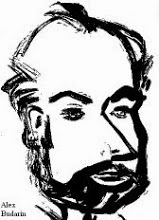
My wife, who is an artist, drew the picture at left in 1996. I had hair on top back then. Now it grows out of my ears and nose instead.
OF ALL THE THINGS I HAVE DONE IN MY LIFE, I am proudest of this blog. I hope someone reads it!
EDUCATION:
Master’s Degree in Sociology;
WORK EXPERIENCE:
Case Worker, Researcher, Teacher, Supervisor, Assistant Manager, Actor, Janitor, Busboy, Day Laborer;
COUNTRIES I HAVE VISITED:
Austria,
England,
France,
Germany,
Switzerland,
Italy,
Slovakia,
Hungary,
Slovenia,
Egypt,
Thailand,
China,
Taiwan,
Japan,
Canada,
Mexico,
Colombia,
Brazil,
Argentina,
Paraguay;
FAMILY: Father from Ukraine, Mother from USA, wife from Colombia, one brother and one sister;
LANGUAGES: English, Spanish and German [although my German is "rusty"];
CITIZENSHIP: USA.
My wife, who is an artist, drew the picture at left in 1996. I had hair on top back then. Now it grows out of my ears and nose instead.
OF ALL THE THINGS I HAVE DONE IN MY LIFE, I am proudest of this blog. I hope someone reads it!
Sunday, October 07, 2007
Advice for Republicans
For the past 6 years, Republicans have been very generous in giving advice to us Democrats. They said we should, for our own good, line up behind the President and support the war in
- Keep Larry Craig in the Senate as long as possible. It’s important to demonstrate loyalty and resolve whatever the circumstances. Remind the public that he is a man of God whose worst curse is, “Jiminy!”
- Look for cases where the government can intervene in private lives for the sake of conservative values, like the Schiavo case. The American public will appreciate your invasion of their privacy for the sake of righteousness.
- Repeatedly remind the American public that George W. Bush is our “Commander Guy”, and what happens in
- IOKIYAR – “it’s OK if you are a Republican.” When we Democrats are involved in sex scandals or financial scandals, that’s a reflection of our permissive culture and moral relativism. Point out that it’s different when Republicans get caught up in a sex scandal or financial scandal. Then it’s a private lapse, and any attention the media gives it is a partisan attack by Democrats and proof that the media is run by liberals.
- Why defend steep tax cuts that overwhelmingly benefit the rich? Just declare, like John Jay, “Those who own the country ought to govern it.”
- What the terrorists want is for our population to be constantly terrified. You’ve been doing that instead. Keep it up. You’ll rob the terrorists of their objective.
- You know that the worst problems our country faces are homosexuals, Spanish-speakers, liberals, Democrats, stem cell research, and folks who disagree with you about the Iraq War. The voting public needs to be told this, as often as possible.
That’s all I can think of for now. No need to thank me. I’m just returning a favor.
ALEX BUDARIN
EDUCATION:
Master’s Degree in Sociology;
WORK EXPERIENCE:
Case Worker, Researcher, Teacher, Supervisor, Assistant Manager, Actor, Janitor, Busboy, Day Laborer;
COUNTRIES I HAVE VISITED:
Austria,
England,
France,
Germany,
Switzerland,
Italy,
Slovakia,
Hungary,
Slovenia,
Egypt,
Thailand,
China,
Taiwan,
Japan,
Canada,
Mexico,
Colombia,
Brazil,
Argentina,
Paraguay;
FAMILY: Father from Ukraine, Mother from USA, wife from Colombia, one brother and one sister;
LANGUAGES: English, Spanish and German [although my German is "rusty"];
CITIZENSHIP: USA.
My wife, who is an artist, drew the picture at left in 1996. I had hair on top back then. Now it grows out of my ears and nose instead.
OF ALL THE THINGS I HAVE DONE IN MY LIFE, I am proudest of this blog. I hope someone reads it!
Wednesday, October 03, 2007
Bush Jr. Vetoes Child Health Care Bill

“There certainly does seem to be a legitimate argument that the president only objects to new spending when Democrats are doing it, because he certainly wasn't objecting when Republicans controlled Congress.” Dan Mitchell, Cato Institute
"Morning Edition, October 3, 2007 · President Bush on Wednesday vetoed a bipartisan bill that would have dramatically expanded children's health insurance, after saying the legislation was too costly and had strayed from its original intent.
It was only the fourth veto of Bush's presidency, and one that some Republicans feared could be used against them in next year's elections. The Senate approved the bill with enough votes to override the veto, but the margin in the House fell short of the required number.
The State Children's Health Insurance Program, or SCHIP, is a joint state-federal effort that subsidizes health coverage for 6.6 million people, mostly children, from families that earn too much to qualify for Medicaid but not enough to afford their own private coverage.
The Democrats who control Congress, with significant support from Republicans, passed the legislation to add $35 billion over five years, allowing an additional 4 million children into the program. It would be funded by raising the federal cigarette tax by 61 cents to $1 per pack.
The president had promised to veto it, saying the Democratic bill was too costly, took the program too far from its original intent of helping the poor, and would entice people now covered in the private sector to switch to government coverage. He wants only a $5 billion increase in funding. Bush argued that the congressional plan would be a move toward socialized medicine by expanding the program to higher-income families.
The president faces a possible rebellion by Republican lawmakers who back the bill. Sen. Charles Grassley (R-IA) berated Bush on the Senate floor for having labeled the legislation "irresponsible" in his radio address Saturday.
The president had promised to veto it, saying the Democratic bill was too costly, took the program too far from its original intent of helping the poor, and would entice people now covered in the private sector to switch to government coverage. He wants only a $5 billion increase in funding. Bush argued that the congressional plan would be a move toward socialized medicine by expanding the program to higher-income families.
The president faces a possible rebellion by Republican lawmakers who back the bill. Sen. Charles Grassley (R-IA) berated Bush on the Senate floor for having labeled the legislation "irresponsible" in his radio address Saturday.
"If you want to talk about the word responsible and whether Congress is responsible or not in this bill, I would say that anybody that wants to leave the program the way it is — and that's what's going to happen with a veto — that's an irresponsible position to take," Grassley said.
House Democratic leaders have said they will wait until next week or later to try to override a veto. They are hoping by then to peel off some 15 Republicans to get the two-thirds majority they need for an override. Texas A&M presidential scholar George Edwards says that lawmakers who stick with the president could pay for it in next year's elections.
House Democratic leaders have said they will wait until next week or later to try to override a veto. They are hoping by then to peel off some 15 Republicans to get the two-thirds majority they need for an override. Texas A&M presidential scholar George Edwards says that lawmakers who stick with the president could pay for it in next year's elections.
"I think in a widely supported policy like the SCHIP bill, that the risks are substantial for Republicans," Edwards said. "It's difficult to take the case to the voters on something specific like that when we're talking about health care for children and explain the complex rationale for opposition."
Asked why the president has also issued veto threats against almost all the spending bills this year, White House spokeswoman Dana Perino said the president has a role to play in the legislative debate.
Asked why the president has also issued veto threats against almost all the spending bills this year, White House spokeswoman Dana Perino said the president has a role to play in the legislative debate.
"One of the things the president can do is say, 'I'm not going to sign a bill that comes to me with extraneous spending. I'm not going to sign a bill that has policies in it that should not be a part of the United States policy,'" Perino said. "And so I would hope that we wouldn't have to do veto threats, but I think that the Democrats have shown that these are the types of legislative angles that they're going to take, and that's why the president has to send some veto threats up."
At issue is the fact that, added together, the spending bills exceed the president's own budget by some $23 billion.
But Dan Mitchell of the libertarian Cato Institute says that amount is paltry compared with the amount of excess spending that Bush signed during the Republicans' control of Congress.
But Dan Mitchell of the libertarian Cato Institute says that amount is paltry compared with the amount of excess spending that Bush signed during the Republicans' control of Congress.
"There certainly does seem to be a legitimate argument that the president only objects to new spending when Democrats are doing it, because he certainly wasn't objecting when Republicans controlled Congress," Mitchell said.
On Tuesday, the chairman of the House Appropriations Committee said that if there is a spending problem, it is the White House asking for nearly $200 billion in war funding.
"If the president is really concerned about stopping red ink, we are prepared to introduce legislation that will provide for a war surtax for that portion of military costs related to our military action in Iraq," Rep. David Obey (D-WI) proposed.
If President Bush does not like that cost, he added, he can shut down the war.
If President Bush does not like that cost, he added, he can shut down the war.
Most Republicans derided the idea of a war surtax.
"You pay for the war by winning the war," said Sen. Lindsey Graham (R-SC). "This is not an accounting exercise. How did we pay for World War II? Everybody rolled up their sleeves and did the best they could."
They also paid a war surtax.
But House Speaker Nancy Pelosi gave the idea a thumbs down; so did Senate Majority Leader Harry Reid.
"The speaker said that is not what she wants," Reid explained. "That's good enough for me."
"You pay for the war by winning the war," said Sen. Lindsey Graham (R-SC). "This is not an accounting exercise. How did we pay for World War II? Everybody rolled up their sleeves and did the best they could."
They also paid a war surtax.
But House Speaker Nancy Pelosi gave the idea a thumbs down; so did Senate Majority Leader Harry Reid.
"The speaker said that is not what she wants," Reid explained. "That's good enough for me."
Facing a spate of veto threats, Democratic leaders show little appetite for a separate fight over raising taxes.
With additional reporting from The Associated Press"
With additional reporting from The Associated Press"
Subscribe to:
Posts (Atom)

