"Published: May 3, 2008 at 5:55 PMTALLAHASSEE, Fla., May 3 (UPI) --
Florida legislators closed their yearly session by passing a penny-pinching budget and making health insurance plans for autistic children, officials said.Despite the tight budget, lawmakers also managed to make health insurance plans for working citizens living in poverty and small businesses, The Miami Herald reported.''Some great things happened today. Historic things happened today,'' Gov. Charlie Crist said of the Friday session.With an all-time high $4 billion in budget cutbacks and a stalling economy looming this year, lawmakers reportedly had to leave behind some high-priority proposals, including a sales-tax holiday and a central Florida rail line.It is reported that public education saw the most severe cutbacks -- $2.3 billion -- while increased funds were given to private schools in the form of vouchers. ''There are corpses strewn about the Capitol. This year there is no money to grease the wheels," Fort Lauderdale Rep. Jack Seiler said."
Saturday, May 10, 2008


Gas costs have been manipulated
Clinton: Gas costs have been manipulated
"Published: May 4, 2008 at 5:50 PMINDIANAPOLIS, May 4 (UPI) --
U.S. Sen. Hillary Clinton, D-N.Y., Sunday blamed market manipulation as the likely cause of record high gas prices in the United States.Appearing on ABC's "This Week With George Stephanopoulos," the Democratic presidential contender said if she is elected in November, she will immediately order an investigation into the industry."We know that there's market manipulation going on. So I would launch an investigation if I were president right now by the Department of Justice and the Federal Trade Commission," Clinton said.The New York senator said any attempts to lower gas prices should require the participation of the Organization of Petroleum Exporting Countries."I would begin to go directly at OPEC," she said. "I think it's been 25 years where we've, you know, largely just been at the mercy of the OPEC countries."Clinton said in addition to taking on OPEC members, she would confront oil companies about the rising cost of gasoline."You see, I really believe we've got to start right now demonstrating a willingness to take on these oil companies," she said in response to a "This Week" audience question."
Source: http://www.upi.com/NewsTrack/Top_News/2008/05/04/clinton_gas_costs_have_been_manipulated/2133/
"Published: May 4, 2008 at 5:50 PMINDIANAPOLIS, May 4 (UPI) --
U.S. Sen. Hillary Clinton, D-N.Y., Sunday blamed market manipulation as the likely cause of record high gas prices in the United States.Appearing on ABC's "This Week With George Stephanopoulos," the Democratic presidential contender said if she is elected in November, she will immediately order an investigation into the industry."We know that there's market manipulation going on. So I would launch an investigation if I were president right now by the Department of Justice and the Federal Trade Commission," Clinton said.The New York senator said any attempts to lower gas prices should require the participation of the Organization of Petroleum Exporting Countries."I would begin to go directly at OPEC," she said. "I think it's been 25 years where we've, you know, largely just been at the mercy of the OPEC countries."Clinton said in addition to taking on OPEC members, she would confront oil companies about the rising cost of gasoline."You see, I really believe we've got to start right now demonstrating a willingness to take on these oil companies," she said in response to a "This Week" audience question."
Source: http://www.upi.com/NewsTrack/Top_News/2008/05/04/clinton_gas_costs_have_been_manipulated/2133/
Saturday, May 03, 2008
Economic cloud over sunny Florida

"By Tom Brown
MIAMI (Reuters) - Economic data continues to suggest that fears of a new "Great Depression" in the United States are overblown. But in places like Miami and Fort Lauderdale, where the housing bust has bitten hard and prices are rising fast, the specter of economic stagnation twinned with inflation looms all too real.
"Since the 1970s we haven't really seen this simultaneous threat of an economic slowdown, and recession, side by side with the threat of inflation," said Sean Snaith, an economics professor at the University of Central Florida.
Nationally, inflation was flat in February, according to the U.S. Labor Department's consumer price index, the most widely used gauge.
But in Miami and Fort Lauderdale, prices were up by 5.3 percent that month, according to the department's southeastern office, in Atlanta, the highest of any metropolitan area in the country.
The department gives national figures for March on Wednesday. The regional figures are released every two months, with the next ones out in May.
For many in Florida, a state that people are leaving in droves because of high property tax and home insurance rates, the biggest and harshest rise has been in energy costs, up 18 percent in the 12 months to the end of February.
And they could continue surging amid Energy Department warnings that gasoline prices could soon hit $4 a gallon in some areas.
"Everything is high. Everything is going up," said Cookie Elias, a Miami-based mother of three as she packed her young children into a minivan after shopping at a local Costco discount retailer in Miami."
Japanese Pay Less for More Health Care

Japan has the longest life span on the planet.
"Japan produces cars, color TVs and computers, but it also produces the world's healthiest people. It has the longest healthy life expectancy on Earth and spends half as much on health care as the United States.
That long life expectancy is partly due to diet and lifestyle, but the country's universal health care system plays a key role, too.
Everyone in Japan is required to get a health insurance policy, either at work or through a community-based insurer. The government picks up the tab for those who are too poor.
It's a model of social insurance that is used in many wealthy countries. But it's definitely not "socialized medicine." Eighty percent of Japan's hospitals are privately owned — more than in the United States — and almost every doctor's office is a private business.
Health Care for Anyone at Anytime
Dr. Kono Hitoshi is a typical doctor. He runs a private, 19-bed hospital in the Tokyo neighborhood of Soshigaya.
Dr. Kono Hitoshi is a typical doctor. He runs a private, 19-bed hospital in the Tokyo neighborhood of Soshigaya.
"The best thing about the Japanese medical system is that all citizens are covered," Kono says. "Anyone, anywhere, anytime — and it's cheap."
Patients don't have to make appointments at his hospital, either.
The Japanese go to the doctor about three times as often as Americans. Because there are no gatekeepers, they can see any specialist they want.
Keeping Costs Low
Japanese patients also stay in the hospital much longer than Americans, on average. They love technology such as magnetic resonance imaging; they have nearly twice as many scans per capita as Americans do. A neck scan can cost $1,200 in the United States.
Professor Ikegami Naoki, Japan's top health economist, explains how Japan keeps MRIs affordable.
Japanese patients also stay in the hospital much longer than Americans, on average. They love technology such as magnetic resonance imaging; they have nearly twice as many scans per capita as Americans do. A neck scan can cost $1,200 in the United States.
Professor Ikegami Naoki, Japan's top health economist, explains how Japan keeps MRIs affordable.
"Well, in 2002, the government says that the MRIs, we are paying too much. So in order to be within the total budget, we will cut them by 35 percent," Ikegami says.
This is how Japan keeps cost so low. The Japanese Health Ministry tightly controls the price of health care down to the smallest detail. Every two years, the health care industry and the health ministry negotiate a fixed price for every procedure and every drug.
That helps keep premiums to around $280 a month for the average Japanese family, a lot less than Americans pay. And Japan's employers pick up at least half of that. If you lose your job, you keep your health insurance.
An Accommodating Insurance System
Japanese insurers are a lot more accommodating than their American counterparts. For one thing, they can't deny a claim. And they have to cover everybody.
Even an applicant with heart disease can't be turned down, says Ikegami, the professor. "That is forbidden."
Nor do health care plans covering basic health care for workers and their families make a profit.
"Anything left over is carried over to the next year," Ikegami says. If the carryover was big, "then the premium rate would go down." "
Med records subject to security breach

"CHICAGO, April 16 (UPI) -- Indiana-based Wellpoint Inc. says a security breach may have allowed Internet access to the personal medical information of 130,000 customers.The health insurance giant says "for a period of time" the Social Security numbers, pharmacy records and other personal health data of customers in several states, including Illinois, "were not properly secured," The Chicago Tribune reported Wednesday.The problem involved two computer servers maintained by a third-party vendor that Wellpoint declined to name, the Tribune said.Wellpoint has been notifying customers of the problem by letter and offering them one year of free credit-monitoring services.Company spokeswoman Cheryl Leamon says outside consultants have already been hired to reduce the risk of future incidents."We have not received any reports of identify theft or credit fraud," Leamon said. "We take the security of our members' personal health information very seriously.""
Internet Med Records: Convenience at a Cost?

"There are Web sites that allow you to keep information about your medical treatment online, where you and your doctor can access it easily. An article in the New England Journal of Medicine on Thursday asks if electronic medical records are the next big thing in health care. The answer? When it comes to keeping these records yourself, it depends.
Debbie Witchey is like many Americans: She wants to have all her medical records accessible online. Dozens of Internet sites offer the service, some free, some not.
Witchey knows about personal health records. She's senior vice president of government affairs for the Healthcare Leadership Council, a Washington, D.C.-based lobbying group for the health care industry. It's pushing something different: electronic health records, which doctors and hospitals keep on computers so they're quickly available to any doctor at any hospital. The council doesn't have a position on personal health records, which individuals maintain.
Witchey knows about personal health records. She's senior vice president of government affairs for the Healthcare Leadership Council, a Washington, D.C.-based lobbying group for the health care industry. It's pushing something different: electronic health records, which doctors and hospitals keep on computers so they're quickly available to any doctor at any hospital. The council doesn't have a position on personal health records, which individuals maintain.
A Personal Experiment
But Witchey, 44, was curious about the benefits of personal health records. She checked out promotional materials from one of the biggest sites, Revolution Health. "I was just about to switch doctors, and one of the things they talked about was how great it was to be able to keep all your records in one place," Witchey says. "I was having to go through the process of getting all my records and moving them around, and I thought, 'Well, this would be a good opportunity to give it a try.' So I signed up."
But Witchey, 44, was curious about the benefits of personal health records. She checked out promotional materials from one of the biggest sites, Revolution Health. "I was just about to switch doctors, and one of the things they talked about was how great it was to be able to keep all your records in one place," Witchey says. "I was having to go through the process of getting all my records and moving them around, and I thought, 'Well, this would be a good opportunity to give it a try.' So I signed up."
By filling out a few forms, she was able to get her old records scanned and uploaded onto the site, where she could print them out and bring them to her new doctor.
The doctor reviewed the records and put them into Witchey's file.
Then, during the physical exam, the doctor noticed Witchey's blood pressure was high and recommended medication. Witchey wanted to try diet first. The doctor said OK, so long as Witchey monitored herself closely, which she realized she could do easily on the Web.
"I tracked my weight and my blood pressure on the Revolution Health site, and then I printed it out and took it to her every month," Witchey says.
She weighed herself weekly and took her blood pressure every day, entering the information in a minute or two. The fact that she was paying daily attention helped her a lot, she says. She lost 50 pounds and dropped her blood pressure from 135/105 to 107/71.
A Time-Consuming Effort
For now, Witchey has to input everything she wants on the site — prescriptions, vaccinations, details of hospitalizations — because her doctor isn't connected to the system.
That's one of the drawbacks of personal health records, says medical records expert Joy Pritts of Georgetown University.
"The problem now is getting information from your family physician, for example," Pritts says. Such doctors typically have "small practices, and most of them don't have their health information in electronic form."
So they can't send it to a Web site.
That could change as big companies get involved. Right now, Microsoft and Google are in various stages of developing online medical records systems. Some major employers, including Intel and Wal-Mart, are piloting programs as well. Some health insurers already let you have access to your records, which includes some information from your doctors.
At the moment, however, creating and maintaining a full health record may be a job for the compulsive, Witchey says.
For now, Witchey has to input everything she wants on the site — prescriptions, vaccinations, details of hospitalizations — because her doctor isn't connected to the system.
That's one of the drawbacks of personal health records, says medical records expert Joy Pritts of Georgetown University.
"The problem now is getting information from your family physician, for example," Pritts says. Such doctors typically have "small practices, and most of them don't have their health information in electronic form."
So they can't send it to a Web site.
That could change as big companies get involved. Right now, Microsoft and Google are in various stages of developing online medical records systems. Some major employers, including Intel and Wal-Mart, are piloting programs as well. Some health insurers already let you have access to your records, which includes some information from your doctors.
At the moment, however, creating and maintaining a full health record may be a job for the compulsive, Witchey says.
"When I first sat down to sign up and get started, I had this vision that I was going to put all my information in here in one sitting, and I'd be all set and ready to go," she says. "And it quickly became clear to me, there's a lot more time to invest in it than I had originally thought about."
She hasn't put in her records from before 2003, for example. "
Into the Brain of a Liar
"We all lie — once a day or so, according to most studies. But usually we tell little lies, like "your new haircut looks great!" And most of us can control when we lie or what we lie about. But some people lie repeatedly and compulsively, about things both big and small.
In 2005, a study published in The British Journal of Psychiatry provided the first evidence of structural differences in the brains of people with a history of persistent lying. The study was led by Yaling Yang, a doctoral student in psychology at the University of Southern California, and Adrian Raine, an expert on antisocial disorders who is now at University of Pennsylvania.
They expected to see some kind of deficit in the brains of these liars, Yang says. But surprisingly, the liars in their study actually had a surplus — specifically, they had more connections in the part of their brains responsible for complex thinking.
Finding Liars
The label "pathological liar" gets used in a variety of ways, and there's no standard psychological definition or test to measure if someone is a pathological liar. So Yang and her team chose to focus their study on people who have a history of repeated lying and seem not to be able to control their lying (hereafter called simply, "liars"). The researchers began by gathering volunteers from temporary employment agencies in the Los Angeles area. The idea was that liars would be over-represented at these agencies; a history of repeated lying would likely make it hard to keep a steady job.
Then they ran 108 volunteers through extensive interviews and a battery of tests that measure patterns of deception. In the end, the team found 12 people who showed strong evidence of repeated and compulsive lying. For control groups, they identified 16 people who had antisocial tendencies but no history of lying and 21 people with no history of either lying or antisocial behavior.
Into the Scanner
Yang and her colleagues put all 49 people, both the liars and the non-liars, into a magnetic resonance imaging scanner and took pictures of their prefrontal cortex. They chose to focus on this area of the brain because previous studies had shown that the prefrontal cortex plays a role in both lying and in antisocial behaviors.
If you could look into this part of the brain, which sits right behind your forehead, you would see two kinds of matter: gray and white. Gray matter is the groups of brain cells that process information. Most neuroscience studies focus on gray matter. But nearly half the brain is composed of connective tissues that carry electrical signals from one group of neurons to another. This is white matter. Roughly, gray matter is where the processing happens, and white matter connects different parts of the brain, helping us to bring different ideas together.
The liars in Yang's study had on average 22 percent to 26 percent more white matter in their prefrontal cortex than both the normal and antisocial controls.
More Connections
Yang speculates that the increase in white matter means that people who lie repeatedly and compulsively are better at making connections between thoughts that aren't connected in reality — like, say, "me" and "fighter pilot." Consequently, while some of us struggle to come up with reasons why we were late for work, or can't go out with someone we don't really like, Yang's liars impulsively serve up a heaping helping of excuses and stories, and fast.
"By having more connections," Yang says, "you can jump from one idea to another and you can come up with more random stories and ideas."
Admittedly, this study is just a first step. It doesn't show that more white matter in the prefrontal cortex accounts for all lying or that it's the only part of the brain involved. And the study does not establish whether the brain differences lead to lying or whether repeated lying somehow "exercises" connections in the brain. While the study was carefully designed to exclude differences that could be due to age, ethnicity, IQ, brain injury or substance abuse, the small sample size means the results need to be replicated. More research is needed to define what behaviors count as pathological lying and to establish the mechanism behind those behaviors. "
In 2005, a study published in The British Journal of Psychiatry provided the first evidence of structural differences in the brains of people with a history of persistent lying. The study was led by Yaling Yang, a doctoral student in psychology at the University of Southern California, and Adrian Raine, an expert on antisocial disorders who is now at University of Pennsylvania.
They expected to see some kind of deficit in the brains of these liars, Yang says. But surprisingly, the liars in their study actually had a surplus — specifically, they had more connections in the part of their brains responsible for complex thinking.
Finding Liars
The label "pathological liar" gets used in a variety of ways, and there's no standard psychological definition or test to measure if someone is a pathological liar. So Yang and her team chose to focus their study on people who have a history of repeated lying and seem not to be able to control their lying (hereafter called simply, "liars"). The researchers began by gathering volunteers from temporary employment agencies in the Los Angeles area. The idea was that liars would be over-represented at these agencies; a history of repeated lying would likely make it hard to keep a steady job.
Then they ran 108 volunteers through extensive interviews and a battery of tests that measure patterns of deception. In the end, the team found 12 people who showed strong evidence of repeated and compulsive lying. For control groups, they identified 16 people who had antisocial tendencies but no history of lying and 21 people with no history of either lying or antisocial behavior.
Into the Scanner
Yang and her colleagues put all 49 people, both the liars and the non-liars, into a magnetic resonance imaging scanner and took pictures of their prefrontal cortex. They chose to focus on this area of the brain because previous studies had shown that the prefrontal cortex plays a role in both lying and in antisocial behaviors.
If you could look into this part of the brain, which sits right behind your forehead, you would see two kinds of matter: gray and white. Gray matter is the groups of brain cells that process information. Most neuroscience studies focus on gray matter. But nearly half the brain is composed of connective tissues that carry electrical signals from one group of neurons to another. This is white matter. Roughly, gray matter is where the processing happens, and white matter connects different parts of the brain, helping us to bring different ideas together.
The liars in Yang's study had on average 22 percent to 26 percent more white matter in their prefrontal cortex than both the normal and antisocial controls.
More Connections
Yang speculates that the increase in white matter means that people who lie repeatedly and compulsively are better at making connections between thoughts that aren't connected in reality — like, say, "me" and "fighter pilot." Consequently, while some of us struggle to come up with reasons why we were late for work, or can't go out with someone we don't really like, Yang's liars impulsively serve up a heaping helping of excuses and stories, and fast.
"By having more connections," Yang says, "you can jump from one idea to another and you can come up with more random stories and ideas."
Admittedly, this study is just a first step. It doesn't show that more white matter in the prefrontal cortex accounts for all lying or that it's the only part of the brain involved. And the study does not establish whether the brain differences lead to lying or whether repeated lying somehow "exercises" connections in the brain. While the study was carefully designed to exclude differences that could be due to age, ethnicity, IQ, brain injury or substance abuse, the small sample size means the results need to be replicated. More research is needed to define what behaviors count as pathological lying and to establish the mechanism behind those behaviors. "
Sunday, April 20, 2008
Pope Bendict Come To Ground Zero

"We ask you in your goodness to give eternal light and peace to all who died here -- the heroic first-responders, our fire fighters, police officers, emergency service workers, and Port Authority personnel, along with all the innocent men and women who were victims of this tragedy simply because their work or service brought them here on September 11, 2001," the pontiff said.
He greeted dignitaries, including New York Gov. David Paterson, New York Mayor Michael Bloomberg and New Jersey Gov. Jon Corzine.
He was joined by 24 people he had invited to join him, including family members of people killed in the terrorist attacks and rescue workers who survived the attacks.
"We ask you, in your compassion, to bring healing to those who, because of their presence here that day, suffer from injuries and illness," he said. "Heal, too, the pain of still-grieving families and all who lost loved ones in this tragedy. Give them strength to continue their lives with courage and hope." Watch the pope pray for the grieving at Ground Zero »
The pope also prayed for "those who suffered death, injury and loss on the same day at the Pentagon and in Shanksville, Pennsylvania. Our hearts are one with theirs as our prayer embraces their pain and suffering."
He asked God to "bring your peace to our violent world -- peace in the hearts of all men and women and peace among the nations of the Earth. Turn to your way of love those whose hearts and minds are consumed with hatred."
He ended the prayer saying, "God of understanding, overwhelmed by the magnitude of this tragedy, we seek your light and guidance as we confront such terrible events. See photos from the pope's visit »
"Grant that those whose lives were spared may live so that the lives lost here may not have been lost in vain. Comfort and console us, strengthen us in hope, and give us the wisdom and courage to work tirelessly for a world where true peace and love reign among nations and in the hearts of all." See how far young people trekked to hear pope »
New York Police Commissioner Raymond Kelly said before the event that "it means a lot to the first responders, and it means a lot to the city."
Asked about the pope's inclusion of a prayer for those "consumed with hatred" Kelly said, "The pope is concerned about world peace ... and every pope is attempting to facilitate that."
As a youth in Germany, Benedict -- then Joseph Ratzinger -- was forced to join the Hitler Youth. He has spoken in the past about the hatred represented by that regime. Watch Benedict talk about the 'sinister' regime »
Sunday marks the last day of his trip to the United States. He is scheduled to celebrate Mass at Yankee Stadium before a crowd of 60,000 people.
Benedict's three-day visit to New York is the second leg of his six-day trip to the United States -- his first since he was elected to the papacy. See where the pope has visited »
On Friday, he visited the United Nations, where he addressed the General Assembly and urged diplomats to intervene in nations unable to protect their populations from human rights violations.
He was only the third pope to address the General Assembly. Pope Paul VI visited in 1965, and Pope John Paul II visited in 1979 and 1995."
He greeted dignitaries, including New York Gov. David Paterson, New York Mayor Michael Bloomberg and New Jersey Gov. Jon Corzine.
He was joined by 24 people he had invited to join him, including family members of people killed in the terrorist attacks and rescue workers who survived the attacks.
"We ask you, in your compassion, to bring healing to those who, because of their presence here that day, suffer from injuries and illness," he said. "Heal, too, the pain of still-grieving families and all who lost loved ones in this tragedy. Give them strength to continue their lives with courage and hope." Watch the pope pray for the grieving at Ground Zero »
The pope also prayed for "those who suffered death, injury and loss on the same day at the Pentagon and in Shanksville, Pennsylvania. Our hearts are one with theirs as our prayer embraces their pain and suffering."
He asked God to "bring your peace to our violent world -- peace in the hearts of all men and women and peace among the nations of the Earth. Turn to your way of love those whose hearts and minds are consumed with hatred."
He ended the prayer saying, "God of understanding, overwhelmed by the magnitude of this tragedy, we seek your light and guidance as we confront such terrible events. See photos from the pope's visit »
"Grant that those whose lives were spared may live so that the lives lost here may not have been lost in vain. Comfort and console us, strengthen us in hope, and give us the wisdom and courage to work tirelessly for a world where true peace and love reign among nations and in the hearts of all." See how far young people trekked to hear pope »
New York Police Commissioner Raymond Kelly said before the event that "it means a lot to the first responders, and it means a lot to the city."
Asked about the pope's inclusion of a prayer for those "consumed with hatred" Kelly said, "The pope is concerned about world peace ... and every pope is attempting to facilitate that."
As a youth in Germany, Benedict -- then Joseph Ratzinger -- was forced to join the Hitler Youth. He has spoken in the past about the hatred represented by that regime. Watch Benedict talk about the 'sinister' regime »
Sunday marks the last day of his trip to the United States. He is scheduled to celebrate Mass at Yankee Stadium before a crowd of 60,000 people.
Benedict's three-day visit to New York is the second leg of his six-day trip to the United States -- his first since he was elected to the papacy. See where the pope has visited »
On Friday, he visited the United Nations, where he addressed the General Assembly and urged diplomats to intervene in nations unable to protect their populations from human rights violations.
He was only the third pope to address the General Assembly. Pope Paul VI visited in 1965, and Pope John Paul II visited in 1979 and 1995."
Thursday, April 17, 2008
We're in a recession
We're in a recession
By Joseph A. Giannone
NEW YORK (Reuters) - New Jersey Governor Jon Corzine, who once led Wall Street giant Goldman Sachs, on Wednesday told Reuters the U.S. economy already is in a recession that could persist, and that federal authorities have only taken the first steps toward turning things around.
"I certainly concur with the view that we are in a recession," Corzine said in an exclusive interview at Reuters' U.S. headquarters in New York. "We have pretty strong indications that we have seen a major, major downshift in the economy. I think we'll find we started in the last quarter of last year."
The New Jersey Democrat became governor of the 11th largest state last year after a short stint as U.S. senator and a 24-year career at Goldman Sachs. Corzine rose through the ranks as a bond trader to become chairman and CEO of what is now the world's largest securities firm, and he played a key role in its 1999 conversion from a partnership to a public company.
Corzine spoke the same day a quarterly survey of corporate finance chiefs found 54 percent believed recession has already begun and would last longer than other recent downturns.
The U.S. central bank, eager to stave off an economic contraction, has cut benchmark rates five times by a combined 2.25 percentage points since September to 3.0 percent.
And on Tuesday, the U.S. Federal Reserve said it would lend $200 billion of Treasuries to primary dealers and accept mortgages as collateral to ease liquidity pressures on banks. These efforts, Corzine said, are only a start.
While "$200 billion is a very large number, it is relatively insignificant in the overall scheme: trillions of dollars in the mortgage market," he said. "It's a really good start, but it's probably not going to change the ocean of credit that's extended in the mortgage arena."
Corzine suggested the Fed would cut benchmark rates again next week, lowering yields for low risk assets and putting pressure on investors to buy other assets. He also predicted that the Fed may intervene again to support the banking system, though it tends to take small steps.
By Joseph A. Giannone
NEW YORK (Reuters) - New Jersey Governor Jon Corzine, who once led Wall Street giant Goldman Sachs, on Wednesday told Reuters the U.S. economy already is in a recession that could persist, and that federal authorities have only taken the first steps toward turning things around.
"I certainly concur with the view that we are in a recession," Corzine said in an exclusive interview at Reuters' U.S. headquarters in New York. "We have pretty strong indications that we have seen a major, major downshift in the economy. I think we'll find we started in the last quarter of last year."
The New Jersey Democrat became governor of the 11th largest state last year after a short stint as U.S. senator and a 24-year career at Goldman Sachs. Corzine rose through the ranks as a bond trader to become chairman and CEO of what is now the world's largest securities firm, and he played a key role in its 1999 conversion from a partnership to a public company.
Corzine spoke the same day a quarterly survey of corporate finance chiefs found 54 percent believed recession has already begun and would last longer than other recent downturns.
The U.S. central bank, eager to stave off an economic contraction, has cut benchmark rates five times by a combined 2.25 percentage points since September to 3.0 percent.
And on Tuesday, the U.S. Federal Reserve said it would lend $200 billion of Treasuries to primary dealers and accept mortgages as collateral to ease liquidity pressures on banks. These efforts, Corzine said, are only a start.
While "$200 billion is a very large number, it is relatively insignificant in the overall scheme: trillions of dollars in the mortgage market," he said. "It's a really good start, but it's probably not going to change the ocean of credit that's extended in the mortgage arena."
Corzine suggested the Fed would cut benchmark rates again next week, lowering yields for low risk assets and putting pressure on investors to buy other assets. He also predicted that the Fed may intervene again to support the banking system, though it tends to take small steps.
Monday, April 07, 2008
The Opiate of Tax Cuts
Nothing feels as good as a hit of taxcut.
In 2000, for the first time in a long while, the US government enjoyed a true surplus of revenue. Presidential candidate George W. Bush assured Americans that, under the circumstances, it was their Right to take a hit of taxcut now. They had earned it. And Americans agreed.
In 2001, the US economy started sagging. Now George W. Bush and the Republicans declared that we Needed a hit of taxcut. The nation could not agree more. The US government would lose income it needed to support itself and share with state and local governments, but each hit of taxcut would feel sOooo gOOood!
So why stop at the Federal level? Florida Republicans knew they had a good product to offer. Give Floridians hits of state taxcuts and they would be happy, and they would vote to keep Republicans in power. Sure the State of Florida would have less money to support itself and contribute to local governments and schools. But each hit of taxcut would feel very, very good.
So why stop there? How can you stop there? We still had the taxes for local governments and school districts. Sure the local governments and school districts needed this money to support themselves, especially given the reduced contributions from the State and Federal governments…but we could still get a hit of taxcut out of them! So a cry went up, especially from rich property owners in Florida, that we needed yet another hit of taxcut, this time out of local revenue.
Florida’s Republican governor and legislators heard those cries, especially the cries from the wealthy property owners. With “Amendment 1” and other measures they moved to ensure that Floridians, particularly rich property owners, could get a hit of taxcut out of local government revenue. And it felt so pleasant to get another hit of taxcut.
Unfortunately, the Federal government can no longer fully support itself. The State of Florida can’t support itself, either, and has to continuously slash departments, staff, and services. Now the local governments and school districts have to do the same. We’re going to feel the hurt from lack of services, and soon. And when that happens, people are going to remember who was pushing taxcut after taxcut. I’m betting that the taxcut pushers will be run out of government.
Postscript: Taxes are the “maintenance fees” for governments, like the maintenance fees for condominium associations. Maintenance fees should be set, raised and lowered in a pragmatic manner, according to needs and capacities determined by the community. To lower them for other reasons is irresponsible.
In 2000, for the first time in a long while, the US government enjoyed a true surplus of revenue. Presidential candidate George W. Bush assured Americans that, under the circumstances, it was their Right to take a hit of taxcut now. They had earned it. And Americans agreed.
In 2001, the US economy started sagging. Now George W. Bush and the Republicans declared that we Needed a hit of taxcut. The nation could not agree more. The US government would lose income it needed to support itself and share with state and local governments, but each hit of taxcut would feel sOooo gOOood!
So why stop at the Federal level? Florida Republicans knew they had a good product to offer. Give Floridians hits of state taxcuts and they would be happy, and they would vote to keep Republicans in power. Sure the State of Florida would have less money to support itself and contribute to local governments and schools. But each hit of taxcut would feel very, very good.
So why stop there? How can you stop there? We still had the taxes for local governments and school districts. Sure the local governments and school districts needed this money to support themselves, especially given the reduced contributions from the State and Federal governments…but we could still get a hit of taxcut out of them! So a cry went up, especially from rich property owners in Florida, that we needed yet another hit of taxcut, this time out of local revenue.
Florida’s Republican governor and legislators heard those cries, especially the cries from the wealthy property owners. With “Amendment 1” and other measures they moved to ensure that Floridians, particularly rich property owners, could get a hit of taxcut out of local government revenue. And it felt so pleasant to get another hit of taxcut.
Unfortunately, the Federal government can no longer fully support itself. The State of Florida can’t support itself, either, and has to continuously slash departments, staff, and services. Now the local governments and school districts have to do the same. We’re going to feel the hurt from lack of services, and soon. And when that happens, people are going to remember who was pushing taxcut after taxcut. I’m betting that the taxcut pushers will be run out of government.
Postscript: Taxes are the “maintenance fees” for governments, like the maintenance fees for condominium associations. Maintenance fees should be set, raised and lowered in a pragmatic manner, according to needs and capacities determined by the community. To lower them for other reasons is irresponsible.
 EDUCATION:
Master’s Degree in Sociology;
WORK EXPERIENCE:
Case Worker, Researcher, Teacher, Supervisor, Assistant Manager, Actor, Janitor, Busboy, Day Laborer;
COUNTRIES I HAVE VISITED:
Austria,
England,
France,
Germany,
Switzerland,
Italy,
Slovakia,
Hungary,
Slovenia,
Egypt,
Thailand,
China,
Taiwan,
Japan,
Canada,
Mexico,
Colombia,
Brazil,
Argentina,
Paraguay;
FAMILY: Father from Ukraine, Mother from USA, wife from Colombia, one brother and one sister;
LANGUAGES: English, Spanish and German [although my German is "rusty"];
CITIZENSHIP: USA.
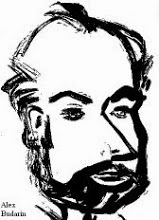
My wife, who is an artist, drew the picture at left in 1996. I had hair on top back then. Now it grows out of my ears and nose instead.
OF ALL THE THINGS I HAVE DONE IN MY LIFE, I am proudest of this blog. I hope someone reads it!
EDUCATION:
Master’s Degree in Sociology;
WORK EXPERIENCE:
Case Worker, Researcher, Teacher, Supervisor, Assistant Manager, Actor, Janitor, Busboy, Day Laborer;
COUNTRIES I HAVE VISITED:
Austria,
England,
France,
Germany,
Switzerland,
Italy,
Slovakia,
Hungary,
Slovenia,
Egypt,
Thailand,
China,
Taiwan,
Japan,
Canada,
Mexico,
Colombia,
Brazil,
Argentina,
Paraguay;
FAMILY: Father from Ukraine, Mother from USA, wife from Colombia, one brother and one sister;
LANGUAGES: English, Spanish and German [although my German is "rusty"];
CITIZENSHIP: USA.
My wife, who is an artist, drew the picture at left in 1996. I had hair on top back then. Now it grows out of my ears and nose instead.
OF ALL THE THINGS I HAVE DONE IN MY LIFE, I am proudest of this blog. I hope someone reads it!
Subscribe to:
Posts (Atom)

